
 United States (English)
 Russia (Pусский)
 France (Français)
 China (中文)
 Spain (Español)
 Germany (Deutsch)
 Portugal (Português)
 Slovakia (slovenský jazyk)
 Australia (English)
 New Zealand (English)

Why Does My RCCB Keep Tripping – Common Causes and Fixes
An RCCB is your first line of defense against electric shock. But when it trips randomly—sometimes several times a day—it stops being a safety device and becomes a productivity killer. For facility managers and site electricians, nuisance tripping means unexpected downtime, frustrated tenants, and urgent callouts.
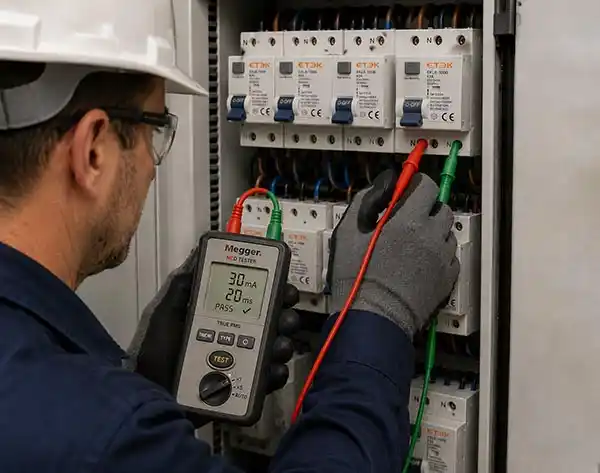
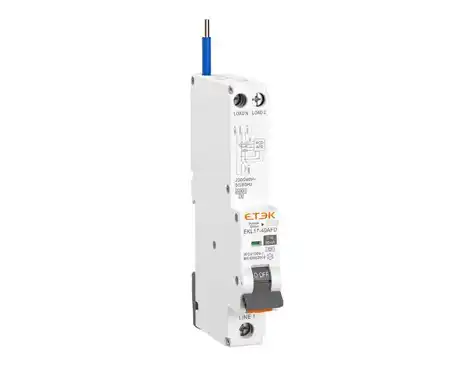
The good news is that most RCCB tripping causes are predictable and fixable without replacing your entire distribution board. This guide walks you through the most common culprits in commercial environments—from hidden moisture to cumulative leakage—and gives you practical earth leakage troubleshooting steps you can apply today. For cases involving variable frequency drives or DC charging equipment, learn more about Type RCCB applications to ensure you select the right protection level.
First, Understand What an RCCB Detects
Before diagnosing, remember what your RCCB actually monitors. Unlike a standard MCB that detects overloads or short circuits, an RCCB measures the difference between current flowing in the live wire and returning via the neutral wire.
-
In a healthy circuit: Live current = Neutral current
-
When tripping occurs: Live current > Neutral current. The difference is residual current—electricity leaking to earth, possibly through a person or damaged insulation.
Key thresholds for commercial buildings:
-
30 mA RCCB: Provides basic protection against electric shock for general socket outlets and lighting circuits.
-
100 mA / 300 mA RCCB: Used for fire protection in high-risk areas or sub-main circuits. These tolerate higher leakage but still trip when insulation degrades.
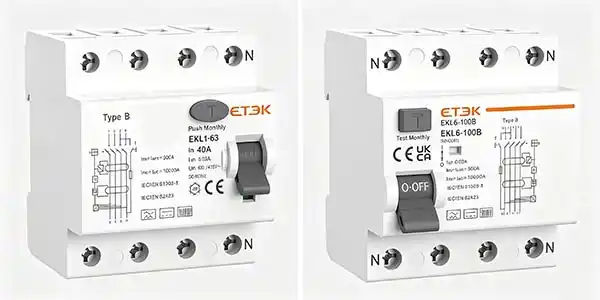
Understanding this helps you differentiate between a genuine fault and a design issue. Now, let’s diagnose why your RCCB keeps interrupting operations.
Moisture or Water Ingress in Outdoor Circuits
Typical signs: Tripping occurs only during rain, after pressure washing floors, or early in the morning when condensation is highest. In commercial facilities, this is the cause of intermittent RCCB trips.
Where to inspect:
-
Outdoor weatherproof sockets
-
Pole-mounted lighting and bollard lamps
-
Air conditioning outdoor unit junction boxes
-
Rooftop equipment feeders and cable entry glands
-
Kitchen floor drains with buried conduit
Why moisture causes tripping: Water has low electrical resistance. When it seeps into a junction box or socket, it creates an unintentional path from live conductors to earth. Even a few drops can divert 15–20 mA—enough to trip a 30 mA RCCB.
Fixes:
-
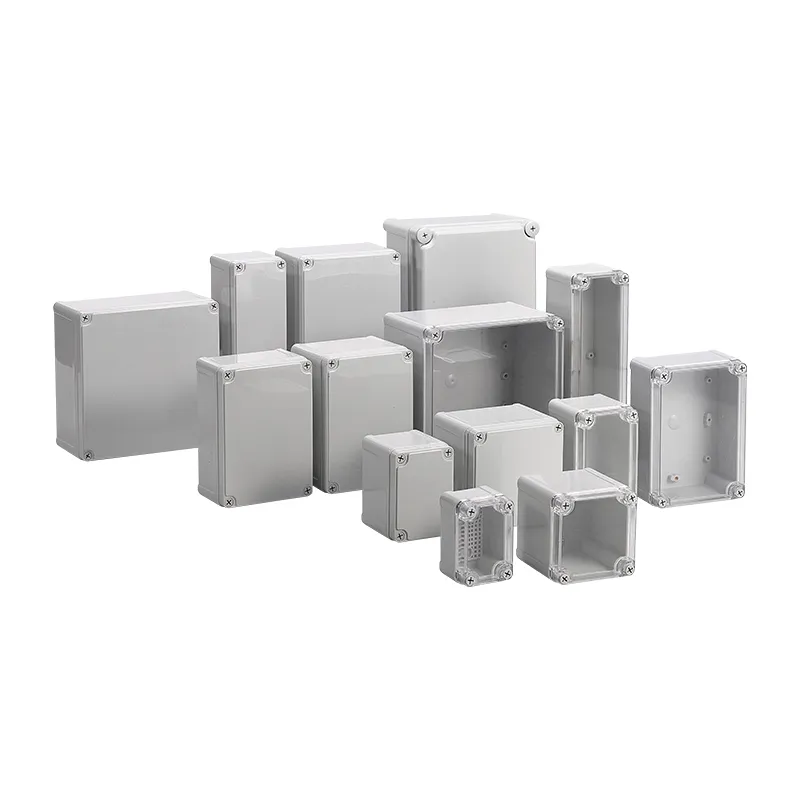
Seal all outdoor junction boxes with IP65 or IP66 rated enclosures. Use dielectric grease on connector pins.
-
Replace water-damaged sockets or luminaire holders—drying them out rarely restores full insulation resistance.
-
For underground conduits that flood seasonally, consider rerouting cables above ground or installing a dedicated RCCB with time delay (S-type) for that circuit only.
Neutral and Earth Connected After the RCCB
This is the most overlooked RCCB tripping cause in commercial retrofits. It occurs when someone accidentally connects the neutral conductor to the protective earth (PE) bar on the load side of the RCCB.
The technical explanation: An RCCB works by comparing phase and neutral currents. If neutral and earth are connected downstream, normal leakage currents instead find a lower-impedance loop back through the neutral. This creates an imbalance that the RCCB interprets as a fault—and it trips.
Common scenarios where this happens:
-
A handyman installs a new socket and ties neutral to the backbox
-
An old lighting circuit shares a combined neutral-earth terminal block
-
In temporary power distribution for construction sites, neutral and earth bars are incorrectly bridged
How to identify: With all loads disconnected, measure resistance between neutral and earth on the load side. A reading near 0 ohms confirms a direct connection. Alternatively, use an RCCB tester—the trip current will be significantly lower than rated.
Fixes:
-
Trace every branch circuit fed by the tripping RCCB. Separate neutral and earth bars completely.
-
In junction boxes, ensure neutral wires are not touching earthed metal enclosures.
-
For circuits feeding IT equipment or UPS systems, install an isolation transformer to break the neutral-earth bond.
Cumulative Leakage Current from Multiple Devices
This is the classic “nuisance trip” scenario: everything works fine for months, then the RCCB starts tripping randomly with no apparent pattern. You reset it, and it holds for hours or days. Then, without warning, it trips again.
The real cause: Every modern electronic device has built-in electromagnetic interference filters containing Y-class capacitors. These capacitors intentionally bleed a tiny amount of current to earth. For a single computer or LED driver, that’s 0.5–1.5 mA. But connect 20 computers, 10 printers, and 15 LED luminaires on the same RCCB, and total leakage easily exceeds 30 mA.
When variable frequency drives, UPS systems, or EV chargers are present, the leakage current may contain smooth DC components that standard AC‑type RCCBs cannot detect. Consider a Type residual current device for industrial VFD loads—it is specifically designed to handle these demanding scenarios.
How to confirm:
-
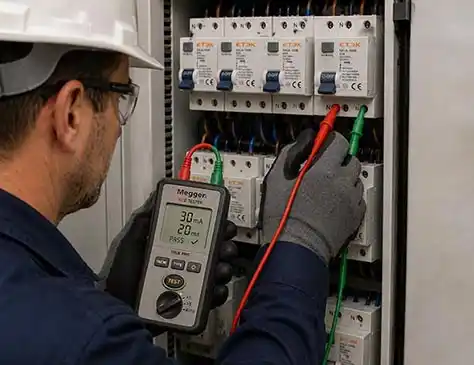
Use a clamp-type leakage current meter clamped around both live and neutral conductors together. The reading is your total residual current.
-
Compare against your RCCB rating:
-
30 mA RCCB → acceptable continuous leakage ≤ 15 mA (50% of rating)
-
100 mA RCCB → acceptable ≤ 50 mA
-
Fixes (from simplest to most involved):
-
Split the circuit: Redistribute loads across two or more RCCBs. For example, put half the workstations on a new 30 mA RCCB.
-
Upgrade to a 100 mA time-delayed RCCB (S-type): This is allowed for sub-main circuits feeding multiple socket outlets in commercial buildings under IEC 60364. The time delay prevents tripping from short-duration leakage spikes.
-
Replace legacy devices: Older switch-mode power supplies often have higher leakage due to degraded Y-capacitors. Upgrading reduces the total Earth's current.
Important: Never replace a 30 mA RCCB with a 100 mA device on a circuit supplying hand-held equipment or outdoor sockets. That violates shock protection requirements.
Quick Troubleshooting Workflow for Electricians
When you arrive at a site with a tripping RCCB, follow this earth leakage troubleshooting sequence. It takes 20 minutes and avoids guesswork.
Step 1 – Isolate the fault path
-
Turn off all loads downstream of the RCCB.
-
Reset the RCCB. Does it hold? If yes, proceed. If it trips with no load, you have a wiring fault.
Step 2 – Divide and conquer
-
With the RCCB still on, reconnect one branch circuit at a time.
-
After each reconnection, wait 10–15 seconds. Some leakage takes time to stabilize.
-
The branch that causes tripping is your suspect.
Step 3 – Measure, don’t guess
Use a leakage current clamp meter. For each suspect branch, record:
-
Leakage with all devices in normal mode
-
Leakage during startup
-
Leakage with devices in standby
Action threshold: If a branch shows steady leakage > 0.5 × RCCB rating, it will trip intermittently when additional leakage occurs from humidity or other circuits.
Prevention Measures for Commercial Facilities
Stop emergency callouts before they happen. Add these to your preventive maintenance schedule:
Quarterly (every 3 months):
-
Use a thermal camera to inspect RCCB terminals and neutral bars. Loose connections generate heat and can cause false trips.
Annually:
-
Perform insulation resistance testing on all final circuits. Record values below 2 MΩ for follow-up.
-
For sensitive areas, install ultra-high sensitivity RCCBs on dedicated circuits. This isolates critical loads from nuisance trips on general power.
Design rule for new installations: Never load an RCCB beyond 70% of its residual current rating in terms of steady-state leakage. Calculate expected leakage as:
(Number of devices) × (Typical leakage per device) + (Cable length in km) × (5 mA/km capacitance leakage).
If your facility includes photovoltaic inverters, induction cooktops, or battery storage systems, standard RCCBs may not provide reliable protection. Check dedicated Type RCCB solutions for PV and EV chargers to ensure full coverage against all types of residual currents.
Frequently Asked Questions (FAQ)
Q: Can a bad appliance cause RCCB to trip even when it’s turned off?
A: Yes—and this surprises many electricians. Some appliances have Y-capacitors directly across the live-neutral input. Even when the device is “off” via its front switch, the capacitors remain connected. Internal moisture or degraded capacitors can leak 5–10 mA continuously. Always unplug the device to truly isolate it.
Q: Does the length of the cable affect RCCB tripping?
A: Absolutely. Every cable has capacitance between its conductors and earth. For long runs, this capacitance alone can generate 5–15 mA of leakage current—before you connect any load. For these applications, use an RCCB with a higher trip threshold or install the RCCB locally at the remote building.
Q: Should I replace an old RCCB that trips randomly?
A: When the RCCB trips under no load with all circuits disconnected, the internal electronic components have aged. Over time, surge protection varistors inside RCCBs degrade and begin leaking current internally. Replacement is the only fix—and it costs less than one hour of emergency callout labor.
Summary and When to Call a Specialist
Most RCCB tripping causes fall into three categories: moisture ingress, neutral-earth faults, or cumulative leakage from multiple devices. With a leakage clamp meter and a systematic approach, a competent site electrician can resolve 80% of cases in under an hour.
But do not mask the problem. Replacing a 30 mA RCCB with a 100 mA unit on a circuit supplying general socket outlets is dangerous and non-compliant. If you cannot identify the cause after following this guide, or if the RCCB trips immediately with all loads disconnected, you may have intermittent arcing or degraded cable insulation.
When to call a specialist:
-
You measure insulation resistance below 0.5 MΩ on any circuit.
-
The RCCB trips at random times but passes all load tests—possible rodent damage or cable crushed inside conduit.
-
You suspect a shared neutral between multiple RCCBs.
In these cases, an insulation resistance test and a full RCCB coordination study are required. For complex installations involving mixed AC/DC loads or high‑frequency leakage, get professional selection advice for residual current protection to save troubleshooting time and ensure code compliance. Your safety—and the safety of everyone in the building—depends on getting it right.