 United States (English)
 Russia (Pусский)
 France (Français)
 China (中文)
 Spain (Español)
 Germany (Deutsch)
 Portugal (Português)
 Slovakia (slovenský jazyk)
 Australia (English)
 New Zealand (English)

Troubleshooting Arc Fault Protection Device False Triggers in Office Buildings
You’re halfway through the workday when the phone starts ringing. Three calls in five minutes. The entire fourth floor has lost power—computers down, VoIP phones dead, the finance team mid-spreadsheet. You walk to the electrical room and find the AFDD has tripped. Again. No visible fault. No burnt smell. No overload. Just a silent, unexplained trip that cost 45 people an hour of productivity.
This scenario plays out in office buildings worldwide. Arc Fault Detection Devices (AFDDs) are critical safety components—they detect dangerous electrical arcs that can cause fires. But when they trip without a genuine hazard, the result is downtime, frustrated occupants, and costly service callouts.
According to field data from licensed electricians, five specific causes account for over 90% of AFDD tripping cases. This article focuses on the office building environment and walks you through each culprit—and exactly how to fix it.
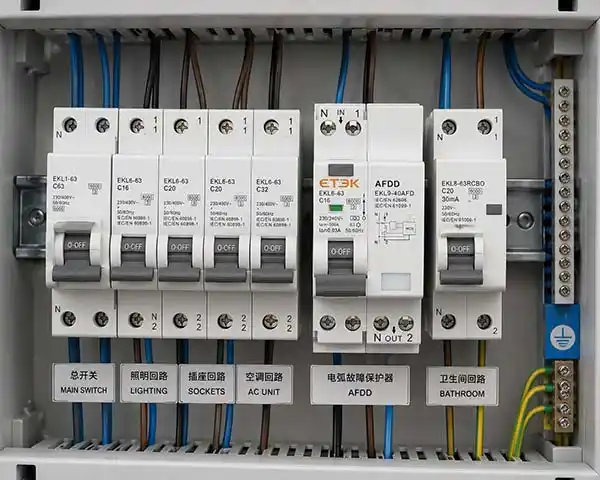
First Rule – Distinguish Between Real Arc and Electrical Noise
Before touching any wiring, you need to understand what your AFDD is actually detecting.
AFDDs don't measure current magnitude like traditional MCBs. Instead, they analyse waveform disturbance on the electrical circuit. When a genuine arc fault develops, the current waveform becomes irregular due to rapid interruptions and restrikes within the conductor. These disturbances are what AFDD technology is designed to detect.
Real arc faults typically show:
-
Stable, sustained waveform patterns
-
Specific frequency characteristics
-
Irregular and intermittent behaviour
Electrical noise from normal office equipment shows:
-
Predictable, repetitive switching noise
-
High-frequency spikes from motor brushes or power supplies
-
Patterns that resemble arcs but are harmless
Modern AFDDs include sophisticated filtering algorithms and many manufacturers maintain a "whitelist" of known appliance waveforms to reduce nuisance tripping. Some newer devices even support firmware updates to improve detection over time. However, in extreme cases—particularly with older equipment or complex loads—false positives still occur.
Your first diagnostic step: Record the exact time of each trip and cross-reference with building activity. Does it happen at 9:05 AM every day? That might be when the cleaning crew starts their vacuum rounds. Does it occur when the conference room dimmer is adjusted? That points to lighting compatibility issues.
Vacuum Cleaners and Power Tools on the Same Circuit
This is the single most common cause of AFDD nuisance tripping in office buildings.
Vacuum cleaners, floor polishers, and power tools with brushed series motors generate carbon brush sparks during normal operation. These sparks produce electrical signatures that closely resemble parallel arc faults. The commutator on these motors—particularly on lower-end equipment—arcs extensively during use. Other common culprits include electric drills, blenders, and any appliance with a brushed motor.
The Fix
- Designate cleaning outlet circuits separately and protect them with RCBO only—not AFDD. This keeps vacuum cleaner noise isolated from sensitive office equipment circuits.
- Label specific outlets as "No Vacuum Cleaner" and instruct cleaning staff to use dedicated sockets that are not AFDD-protected. Relocate high-risk tools to dedicated non-AFDD circuits where local codes permit.
- If segregation isn't possible, test appliances one at a time to isolate the exact device causing the trip, then consider replacing older vacuums with newer models that meet modern EMC standards.
Loose Neutral Wire in a Junction Box
Poor connections are a hidden hazard that AFDDs are specifically designed to catch. But not every loose connection creates a dangerous arc—some simply produce minor sparking that the AFDD interprets as a fault.
A loose neutral terminal in a junction box, outlet, or distribution board creates resistance, heat, and unintended arcing. Temperature fluctuations from daily heating and cooling cycles cause wires to expand and contract, gradually loosening terminal screws over time. This is particularly common in older buildings that have undergone renovations.
In multi-wire circuits where neutral conductors are shared, improper connections can create current imbalances that AFDDs interpret as fault conditions.
The Fix
- With main power isolated, systematically check every neutral terminal in the affected circuit—junction boxes, socket outlets, light fittings, and the distribution board itself.
- Torque all terminals to manufacturer specifications. Loose screws are often invisible to the naked eye.
- Use a thermal imaging camera to scan the circuit under load. Temperature anomalies pinpoint exactly where resistance—and therefore arcing—is occurring. Pay special attention to neutral bars in distribution boards.
Critical warning: If the AFDD/RCBO trips again after tightening, disconnect all appliances and test the bare circuit. If it still trips, you may have a genuine wiring fault that requires professional investigation.
Overlapping Ground and Neutral After the AFDD
This is a wiring error that causes current sharing between neutral and earth paths.
Incorrect neutral-to-earth connections downstream of the AFDD—common in older lighting fixtures, certain electronic equipment, or poorly executed modifications—create abnormal current paths. The AFDD sees this as an imbalance or irregular waveform and trips.
The problem is particularly prevalent in:
-
Older buildings with mixed wiring standards
-
Retrofit LED lighting installations where drivers are improperly earthed
-
Circuits with shared neutrals across multiple phases
The Fix
The golden rule: Neutral (N) and protective earth (PE) must only be connected at the main distribution board—never downstream.
- Inspect every junction box, light fitting, and outlet on the affected circuit for N-PE bonding.
- Separate all N and PE conductors. They should remain isolated throughout the entire circuit.
- Verify that incoming and outgoing line and neutral wires at the AFDD terminals are correctly connected according to product markings. Crossed L and N connections are a surprisingly common installation error.
Dimmer Switches and Electronic Ballasts
Modern office lighting is a major source of electrical noise that can fool AFDDs.
TRIAC-based dimmer switches produce high dv/dt spikes—rapid voltage changes that occur when the dimmer chops the AC waveform. These sharp transitions can resemble arc fault signatures to sensitive detection algorithms.
Electronic ballasts for fluorescent lighting and switch-mode power supplies in LED drivers generate high-frequency switching noise. While this noise is typically predictable and repetitive, older or low-quality ballasts can produce erratic patterns that trigger false trips.
The problem is compounded when multiple dimmers or electronic ballasts are on the same circuit—the cumulative noise can push the AFDD past its threshold.
The Fix
- Replace standard dimmers with AFDD-compatible dimmers specifically tested to IEC 62026 standards for unwanted tripping. Some manufacturers offer dimmers designed to minimise high-frequency noise.
- Where possible, exclude lighting circuits from AFDD protection entirely and reserve AFDDs for socket outlet circuits with sensitive equipment.
- Separate dimmer circuits from other loads. A dedicated lighting sub-board with its own protection allows dimmers to operate without affecting office equipment circuits.
- Upgrade older electronic ballasts and LED drivers to modern units with better EMI filtering.
Damaged AFDD Unit Itself
Sometimes the AFDD isn't falsely triggered—it's faulty.
Internal sensors can drift in sensitivity over time, particularly after:
-
Lightning strikes or transient voltage surges
-
Age-related component degradation
-
Manufacturing defects
A damaged AFDD may trip unpredictably or fail to detect genuine arcs. The device's internal electronics—essentially a small computer monitoring waveforms—can develop subtle faults that aren't obvious from external inspection.
The Fix
Diagnostic method: Take the suspect AFDD and install it on a known stable circuit in the same building—one with no history of nuisance tripping. If it continues to trip on the stable circuit, the device itself is faulty.
Alternative test: Install a known-good AFDD on the problematic circuit. If the tripping stops, the original unit was the problem.
Action: Replace faulty units with new devices from a reputable manufacturer. Some modern AFDDs include built-in self-testing and LED fault codes that indicate the specific reason for tripping.
Note: A device that doesn't trip when the test button is pressed has failed and must be replaced immediately.
Workflow for Systematic Troubleshooting
When faced with an unexplained AFDD trip, follow this structured process:
Record and Observe: Document the exact time and date of each trip. Cross-reference with building schedules—does it coincide with cleaning, meetings, or catering?
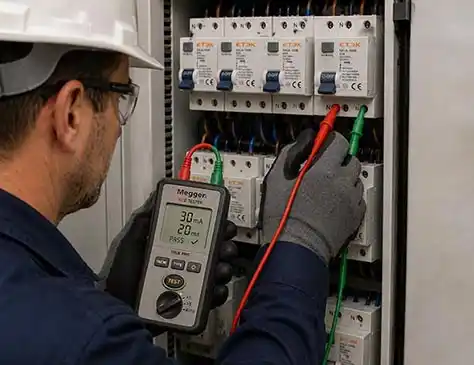
Check Insulation Resistance: Using a megohmmeter, verify insulation resistance on the circuit exceeds 1 MΩ. Low resistance indicates genuine wiring degradation.
The RCBO Swap Test: Temporarily replace the AFDD with a standard RCBO for one week. If the circuit stops tripping, you've confirmed the issue is nuisance tripping, not a genuine fault.
Load Isolation: Reconnect the AFDD and systematically disconnect loads one at a time. Start with half the circuit disconnected, then narrow down. The device or appliance that stops the tripping when disconnected is your culprit.
Replace or Segregate: Once identified, either replace the offending equipment, move it to a non-AFDD circuit, or install additional filtering.
Frequently Asked Questions About AFDD Nuisance Tripping
Q: Will a higher sensitivity AFDD cause more false trips?
AFDD sensitivity is typically fixed by the manufacturer to meet IEC 62606 standards. However, some models offer selectable "anti-interference modes" that adjust detection thresholds for specific environments. Check your device specifications.
Q: Can a lightning strike cause permanent false tripping?
Yes. Transient overvoltages can damage the internal IC and cause permanent sensitivity drift. If an AFDD starts nuisance tripping after a storm, replacement is usually the only fix.
Q: Is there a way to log trip events without a BMS?
Many modern AFDDs include LED flash codes that indicate the type of fault detected (series arc, parallel arc, or overload). Some Wi-Fi-connected models log events and can be monitored remotely. Check your device's manual for the specific flash pattern legend.
Q: What's the difference between an AFDD and an AFCI?
Functionally similar—both detect arc faults. AFDD is the term used in IEC standards, while AFCI is used in North American NEC applications. The technology and troubleshooting principles are the same.
Prevention and Best Practices for New Installations
The best way to avoid AFDD nuisance tripping is to design it out from the start:
Separate circuits strategically:
-
Dedicated circuits for cleaning equipment
-
Separate lighting and socket circuits
-
Sensitive equipment on their own AFDD-protected circuits
Label everything clearly: Mark distribution boards and outlet plates with "No Vacuum Cleaner" or "Cleaners Use Dedicated Sockets Only" to prevent well-meaning staff from plugging into the wrong circuit.
Choose compatible equipment: When specifying dimmers, ballasts, and LED drivers, look for products explicitly tested for AFDD compatibility.
Budget for quality: Cheap AFDDs are more prone to nuisance tripping. Invest in devices from reputable manufacturers with proven track records and, where available, firmware update capability.
Document the installation: Record which circuits have AFDDs, which loads are connected, and any known compatibility issues. This information is invaluable when troubleshooting future trips.
Final Word
An AFDD that trips without an obvious fault is frustrating—but it's almost always solvable. The five culprits covered in this article account for the vast majority of cases in office environments. Work through them systematically, and you'll restore reliable protection without the nuisance trips that disrupt your building's operations.
Remember: AFDDs save lives and prevent fires. The goal isn't to disable them—it's to make them work correctly in your specific environment.